Updated · Published August 16, 2026
Drive Aluminum Rollator Review (2026): The Light One
An in-depth review of the Drive Medical aluminium rollator — why 13 lb rather than 18.6 lb decides whether a rollator gets used, the 6 inch wheels trade-off, and who should buy steel instead.
As an Amazon Associate we earn from qualifying purchases. Read our affiliate disclosure.
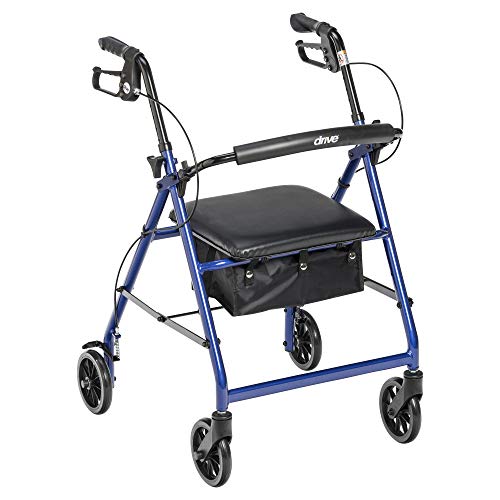
Drive Medical Aluminum Rollator
Verdict: The rollator that fits in a car boot without help. Five and a half pounds lighter than the steel version, and that difference decides whether trips happen.
Best for: easy handling, lifting into a car.
Our top rollator pick is a steel Drive Medical at 18.6 lb, and the honest objection to it is the weight. This is the same manufacturer answering that objection: the same 300 lb capacity, five and a half pounds lighter, with smaller wheels as the trade.
Why it works for seniors
Weight is the specification that decides whether a rollator gets used, because it is lifted far more often than it is pushed. A frame that a carer cannot load alone quietly ends the outings it was bought to enable.
The capacity does not drop. Aluminium is often assumed to mean flimsy, but this holds the same 300 pounds as the steel version, so the saving is genuinely free rather than paid for in strength.
It will not rust. Rollators live where the weather gets in, and a steel frame wheeled in wet through a few winters corrodes at the joints. This is the sort of durability that only shows up in year three.
Specifications
Specifications
| Weight Capacity | 300 lb |
|---|---|
| Weight | 13 lb |
| Wheels | 6 in |
| Frame | Aluminum |
Pros and cons
Pros
- 13 lb makes one-person car loading realistic
- 300 lb capacity, unchanged from the steel version
- Aluminium resists the rust that damp storage causes
- Lifetime frame warranty
- Folds narrow for a boot or a hallway
Cons
- 6 inch wheels stall on thresholds and kerb lips
- Less planted on gravel and grass
- Costs more than an equivalent steel frame
Who it's best for
Best for
Indoor use, smooth pavement and anywhere a carer has to lift the rollator into a car. Also the better choice for damp storage.
Skip it if
Most walking is outdoors on rough or uneven ground. Bigger 7.5 or 8 inch wheels clear obstacles that stop these ones dead, and that is worth the extra weight if nobody has to lift the frame.
Lock both brakes before sitting
Push both hand brakes into the park position before the user sits on the seat. A rollator with free wheels can roll out from under them, which is the most common cause of rollator-related falls.
Alternatives worth considering
- Rough ground outdoors? The steel version has 7.5 inch wheels that clear thresholds — see our rollator roundup.
- Leaning weight on the frame? That is a standard walker requirement, not a rollator one — see rollator vs walker.
- Cannot walk the distance at all? A transport wheelchair is the right category.
The verdict
If anyone has to lift this into a car, buy the aluminium one. The weight saving is the whole product and it is real. Buy the steel version instead only if the walking is mostly outdoors on rough ground, where the bigger wheels matter more than the pounds.
Check Price on Amazon(opens Amazon in a new tab)Frequently Asked Questions
Tap a question to see the answer.